
Can Dogs Eat Celery? A Complete Guide to Safety, Benefits, and Serving Tips
Celery is a common vegetable found in many homes. People use it in salads, soups, juices, and snacks because it is low in calories and full of water. Since dog owners often eat celery themselves, it is natural for dogs to become curious when they see it being chopped or eaten. Many dogs beg for a bite, and pet parents often wonder whether it is safe to share.
Not all human foods are safe for dogs. Some vegetables are healthy, while others can cause serious health problems. This is why it is important to understand the facts before feeding celery to your dog. The good news is that celery is generally safe for dogs when prepared properly and given in moderation. However, there are also risks if it is fed incorrectly or in large amounts.
This article explains everything dog owners need to know about celery and dogs, starting with safety, health benefits, and possible risks. The information shared here is based on commonly accepted veterinary nutrition principles and guidance from animal health experts.
Can Dogs Eat Celery?
Yes, dogs can eat celery. Veterinary nutrition experts agree that celery is a non-toxic vegetable for dogs and can be safely fed as an occasional treat. It is not a required part of a dog’s diet, but it does not contain substances that are poisonous to dogs, unlike foods such as onions, garlic, grapes, or raisins.
Dogs are classified as omnivores. This means that although their diet should mainly consist of animal-based protein, they are able to digest and benefit from certain plant foods. This is supported by the fact that most commercial dog foods include vegetables, grains, and plant fibers to support digestion and overall health.
That said, celery should never replace a dog’s regular food. According to veterinary feeding guidelines, treats and human foods should make up no more than 10% of a dog’s daily calorie intake, with the remaining 90% coming from a complete and balanced dog food. Celery fits well into this “treat” category when given in small amounts.
Before giving celery—or any new food—to your dog for the first time, veterinarians strongly recommend checking with your vet. Factors such as your dog’s age, size, medical history, digestive sensitivity, and prescription diets can affect whether celery is suitable for them.
Is Celery Good for Dogs?
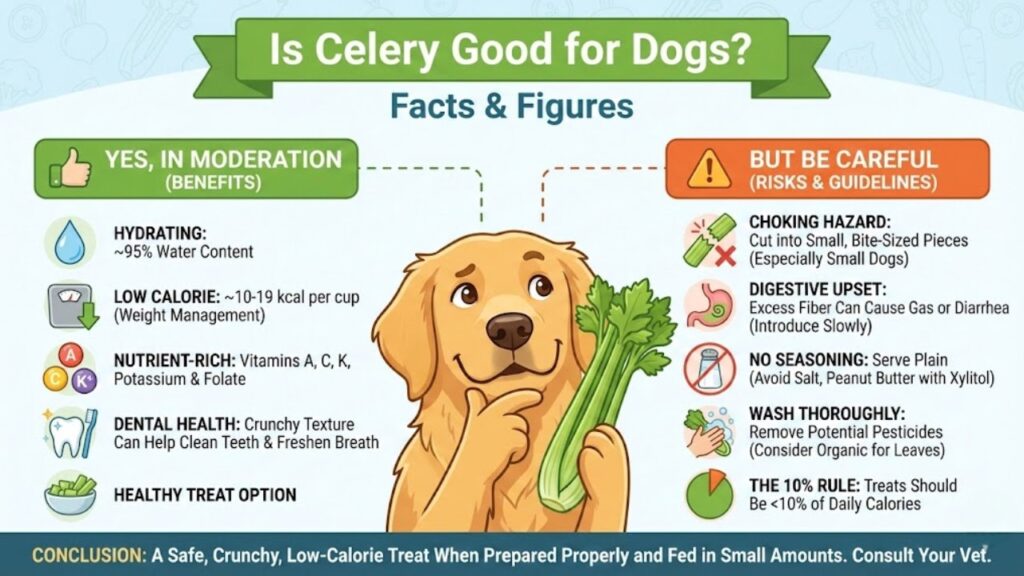
Celery can be good for dogs when fed properly. While dogs do not need celery to stay healthy, it does offer several benefits that make it a better choice than many processed treats.
Nutritional Value of Celery
Celery is made up of about 95% water, which helps with hydration. This is especially useful for dogs during hot weather or for dogs that do not drink enough water on their own.
Celery also contains important nutrients, including:
- Vitamin A, which supports vision, skin health, and immune function
- Vitamin C, an antioxidant that helps reduce inflammation and supports immune health
- Vitamin K, which plays a role in blood clotting and bone health
- Potassium, which helps with muscle function and fluid balance
- Calcium and magnesium, which support bones and muscles
- Dietary fiber, which supports digestion
Nutrition research shows that fiber helps regulate bowel movements and supports healthy gut bacteria. This is why small amounts of fiber-rich vegetables are often included in dog food formulas.
Health Benefits for Dogs
One of the biggest benefits of celery is that it is very low in calories. A medium celery stalk contains fewer than 6–10 calories, making it a good option for dogs that need to lose weight or maintain a healthy weight. Veterinary obesity studies show that low-calorie, high-fiber snacks can help dogs feel full without overeating.
The crunchy texture of raw celery may also help clean a dog’s teeth by gently scraping plaque from the surface. While celery cannot replace brushing or dental chews, it may slightly support oral health and help freshen breath.
Celery’s high water content also supports hydration, which is important for kidney function, digestion, and temperature regulation.
Is Celery Bad for Dogs? (Potential Risks)
Although celery is generally safe, it is not risk-free. Like many vegetables, it can cause problems if fed incorrectly or in excess.
Digestive Upset
Dogs have shorter digestive systems than humans, which means they can struggle to break down large amounts of raw vegetables. Eating too much celery may cause:
- Gas and bloating
- Diarrhea
- Nausea or vomiting
Veterinary studies on canine digestion show that sudden increases in fiber can disrupt the gut and lead to stomach upset. This is why celery should always be introduced slowly.
Choking and Intestinal Blockage
Celery is fibrous and stringy. Large chunks or whole stalks can be a choking hazard, especially for small dogs and puppies. In some cases, dogs may swallow pieces whole, which can lead to intestinal blockage. Veterinary emergency reports confirm that fibrous vegetables are a common cause of foreign-body obstruction when not cut properly.
Excessive Urination
Celery has a mild diuretic effect, meaning it can increase urine production. Eating too much celery may cause dogs to urinate more frequently. While this is not usually dangerous, it can be uncomfortable and problematic for dogs with urinary or kidney issues.
Pesticide Exposure
Celery is known to absorb pesticides easily when grown conventionally. According to data from agricultural monitoring programs, celery often ranks high for pesticide residue. This is especially true for the leaves, which may contain higher chemical concentrations. Feeding unwashed or non-organic celery increases this risk.
Harmful Additions
Celery itself is safe, but celery prepared with salt, butter, onion, garlic, or seasoning is not safe for dogs. Onion and garlic are scientifically proven to be toxic to dogs and can damage red blood cells.
Can Dogs Eat Celery Leaves?
Dogs can eat celery leaves, but it is usually not recommended. While celery leaves contain higher amounts of calcium, potassium, and vitamin C than the stalks, they also carry the highest pesticide residue. Agricultural food safety reports regularly list celery as a vegetable that absorbs chemicals easily during farming.
If the celery is organic and thoroughly washed, small amounts of leaves are generally safe. However, for non-organic celery, most veterinarians advise removing and discarding the leaves to reduce chemical exposure. Feeding the stalk only is the safest option for most dogs.
Can Dogs Eat Celery Sticks? (Raw vs Cooked)

Yes, dogs can eat celery sticks, but how they are prepared matters.
- Raw celery is crunchy and low in calories. It may help freshen breath and lightly clean teeth. However, dogs cannot digest raw vegetables very well, so they absorb fewer nutrients from raw celery.
- Cooked celery (steamed or boiled plain) is easier to digest and allows better nutrient absorption. Cooking breaks down the plant fibers, making vitamins and minerals more available.
Whole celery sticks should never be given as-is. Always cut celery into small, bite-sized pieces to prevent choking and digestive blockage.
How Much Celery Can Dogs Eat?
Veterinary feeding guidelines recommend that treats should make up no more than 10% of a dog’s daily calorie intake. Celery is low in calories, but eating too much can still cause stomach upset.
General serving guidance:
- Extra-small dogs (under 10 lbs): 1 small piece
- Small dogs (11–20 lbs): 1–2 small pieces
- Medium dogs (21–50 lbs): 2–3 small pieces
- Large dogs (51–90 lbs): Small handful
- Extra-large dogs (90+ lbs): Handful
These amounts can be given occasionally or daily if your dog tolerates celery well.
How to Safely Feed Celery to Dogs
To safely feed celery to your dog:
- Wash celery thoroughly to remove dirt and chemicals
- Remove leaves unless the celery is organic
- Cut into small, bite-sized pieces
- Remove long strings from the stalk
- Start with a small amount and observe your dog
- Never add salt, butter, onion, garlic, or seasoning
Veterinarians stress that slow introduction is key to avoiding digestive upset.
Ways to Serve Celery to Dogs
Celery can be served in several dog-safe ways:
- Raw or cooked plain as a treat
- Mixed into regular dog food
- Frozen pieces for hydration in hot weather
- Stuffed into treat toys with xylitol-free peanut butter
- Blended or juiced and poured over food
All serving methods should focus on simplicity and moderation, following veterinarian-approved feeding practices.
My Dog Ate Too Much Celery — What Should I Do?
If your dog eats too much celery, watch for mild digestive upset, such as:
- Gas or bloating
- Loose stools or diarrhea
- Nausea or vomiting
- Discomfort or decreased appetite
In most cases, these symptoms are temporary and resolve on their own.
Seek veterinary help immediately if your dog shows serious symptoms like:
- Severe vomiting or diarrhea
- Blood in stool or vomit
- Weakness, lethargy, or collapse
Veterinarians can provide supportive care to prevent dehydration and treat complications.
Frequently Asked Questions (FAQs)
Can dogs eat raw celery?
Yes, raw celery is safe if washed thoroughly and cut into small pieces.
Can dogs eat cooked celery?
Yes, cooked celery is safe and easier to digest, but avoid adding salt or seasonings.
Can dogs eat frozen celery?
Yes, frozen celery is safe, though it may lose some nutrients during freezing.
Can dogs eat celery sticks?
Yes, but always cut into bite-sized pieces to avoid choking.
Can dogs eat celery leaves?
Leaves are safe only if organic and well-washed. Otherwise, remove to avoid pesticide exposure.
Can puppies eat celery?
Yes, but only in very small, soft pieces to reduce choking and digestive upset.
Other Vegetables That Are Safe for Dogs
If your dog doesn’t like celery or you want variety, other healthy, dog-safe vegetables include:
- Carrots
- Broccoli (in small amounts)
- Green beans
- Cauliflower
- Lettuce
- Bell peppers
- Zucchini
- Brussels sprouts
- Spinach
- Cabbage
Vegetables should always be plain, washed, and cut into small pieces. Avoid seasonings, sauces, or toxic vegetables like onions and garlic.
Key Takeaways
Celery is safe for dogs as long as it is fed in moderation. It is a healthy snack that provides hydration, fiber, vitamins like A, C, and K, and important minerals. Always cut celery into small pieces to prevent choking, especially for small dogs, and avoid giving the leaves unless they are organic. Never add salt, butter, or any ingredients that could be harmful. Treats, including celery, should make up no more than 10% of your dog’s daily calories. Introduce celery slowly and watch for any signs of digestive upset. When in doubt, consult your veterinarian to make sure celery is safe for your dog.
Other Fruits And Vegetables Dogs Can Eat
Dog can enjoy many of the same fruits and vegetables you eat, such as: