Can Dogs Eat Corn? Benefits, Risks, and Safe Ways to Feed Your Pup
Corn is one of the most common foods we see during warm weather. It shows up at backyard barbecues, family dinners, picnics, and summer cookouts. Whether it’s grilled corn on the cob, boiled sweetcorn, or popcorn during movie night, corn is everywhere. Naturally, dog owners often wonder if they can share this food with their furry friends.
Dogs are curious eaters. When they smell food cooking or see us eating, they often beg for a bite. This leads to an important and responsible question: Can dogs eat corn safely, or could it harm them?
The short answer is yes, dogs can eat corn, but only in certain forms and amounts. Like many human foods, corn can be safe and even nutritious when prepared correctly. However, feeding it the wrong way can create serious health risks, such as choking or digestive blockages.
Veterinary nutrition experts agree that corn is not harmful by default. In fact, it has been used in commercial dog food for decades. The key is understanding how corn affects a dog’s body, which parts are safe, and how much is appropriate.
This article explains the science, benefits, risks, and best practices for feeding corn to dogs so pet owners can make informed, confident decisions.
Can Dogs Eat Corn?
Yes, dogs can eat corn, but not all types of corn are safe. This distinction is very important.
Safe forms of corn for dogs:
- Plain, cooked corn kernels
- Fresh or frozen corn (without seasoning)
- Plain, air-popped popcorn (occasionally)
Unsafe forms of corn:
- Corn on the cob
- Corn husks and silk
- Seasoned, buttered, or salted corn
- Corn products like chips, corn syrup, or creamed corn
Dogs are omnivores, meaning they can digest both animal proteins and plant-based foods. Their digestive systems can process cooked grains, including corn, quite efficiently. This ability developed over thousands of years of domestication, as dogs adapted to eating scraps and foods alongside humans.
However, moderation matters. Corn should never replace a dog’s main diet. It should only be offered as an occasional treat or as part of a balanced, complete dog food formula.
Veterinarians emphasize that the way corn is prepared makes all the difference. Cooked corn is easier to digest, while raw or whole cob corn can be dangerous. Understanding this difference helps prevent avoidable health emergencies.
Is Corn Safe for Dogs?
From a veterinary nutrition standpoint, corn is considered safe for most dogs when served properly.
One of the strongest reasons corn is considered safe is its widespread use in commercial dog food. Many well-established pet food brands include corn as a carbohydrate source. These formulas are designed according to nutritional standards set by organizations such as the Association of American Feed Control Officials (AAFCO), which ensures foods meet dogs’ dietary needs.
Veterinary nutritionists explain that corn:
- Is highly digestible when cooked
- Provides usable energy
- Does not cause inflammation or toxicity in healthy dogs
A common myth is that corn is just a “cheap filler” with no value. This is incorrect. Research in animal nutrition shows that corn contributes essential nutrients and is not harmful when processed correctly.
That said, individual dogs are different. A very small percentage of dogs may have a sensitivity or allergy to corn. This is rare studies show food allergies in dogs are far more commonly linked to animal proteins like beef, dairy, or chicken rather than grains.
Before introducing any new food, including corn, veterinarians recommend:
- Starting with a very small amount
- Watching for digestive or skin reactions
- Consulting a vet if any unusual symptoms appear
For the vast majority of dogs, corn is safe, digestible, and non-toxic when fed responsibly.
Nutritional Value of Corn for Dogs
Corn offers real nutritional benefits and is far more than empty calories. From a scientific nutrition perspective, corn provides several components that support a dog’s overall health.
Carbohydrates for Energy
Corn is rich in carbohydrates, which serve as a primary energy source. Dogs use carbohydrates to fuel daily activities such as walking, playing, and maintaining body functions. Properly cooked corn allows dogs to access this energy efficiently.
Protein and Amino Acids
Corn contains plant-based protein and amino acids that help support muscle maintenance, skin health, and tissue repair. While it does not replace animal protein, it contributes to overall protein intake.
Healthy Fats (Linoleic Acid)
Corn is a natural source of linoleic acid, an omega-6 fatty acid that dogs cannot produce on their own. This fatty acid supports:
- Healthy skin
- Shiny coat
- Immune system function
Fiber for Digestion
Corn contains both soluble and insoluble fiber. Fiber plays an important role in:
- Supporting gut health
- Promoting healthy bowel movements
- Preventing constipation and mild diarrhea
It is normal for dogs to pass some corn kernels undigested. This does not mean corn is unsafe—it simply reflects how fiber works in digestion.
Antioxidants and Vitamins
Corn contains antioxidants such as:
- Vitamin E
- Beta-carotene
- Lutein and zeaxanthin
These compounds help protect cells from oxidative stress and support:
- Immune health
- Eye health
- Long-term cellular protection
Corn also provides vitamin C and small amounts of B vitamins, which assist with metabolism and energy use.
Minerals
Corn supplies minerals like magnesium, phosphorus, potassium, and trace elements that help support organ function, nerve signaling, and muscle health.
From a nutritional science perspective, these facts explain why corn continues to be included in high-quality dog foods and recommended by veterinary nutrition experts.
Health Benefits of Corn for Dogs
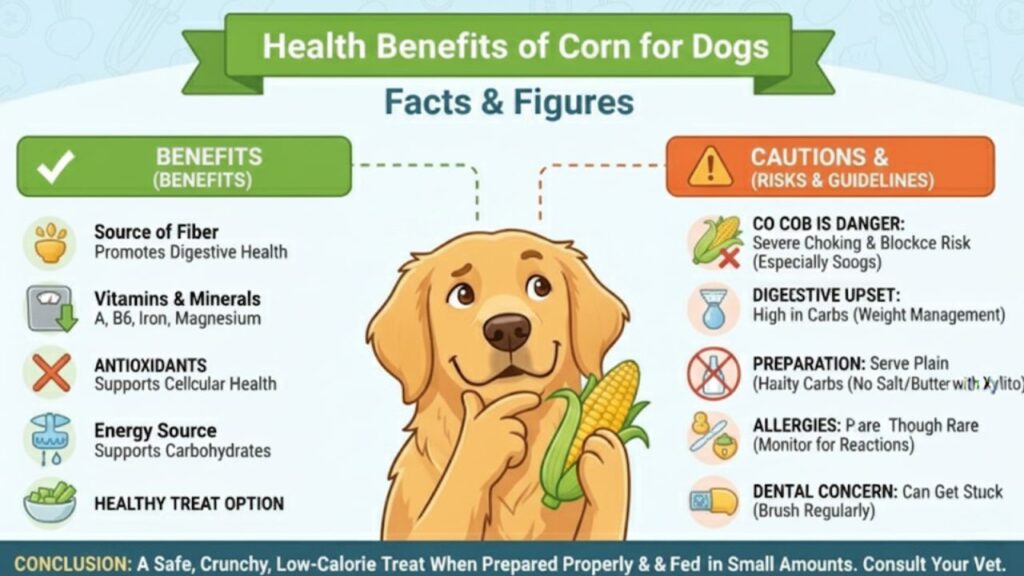
When given in moderation, corn can support several aspects of a dog’s health. Veterinary nutrition research confirms that properly cooked corn provides usable energy, which helps active dogs stay energetic throughout the day.
The fiber in corn supports digestion by promoting healthy bowel movements and gut motility. This can help prevent mild constipation and improve stool quality. Corn also contains antioxidants, such as vitamin E and beta-carotene, which help protect cells from damage and support immune function.
Linoleic acid, an omega-6 fatty acid found in corn, plays an important role in maintaining healthy skin and a shiny coat. Some studies also show that carotenoids like lutein and zeaxanthin help support long-term eye health in dogs.
How Much Corn Can Dogs Eat?
Corn should be treated as an occasional snack, not a main food source. Veterinary guidelines recommend that treats—including vegetables like corn—make up no more than 10% of a dog’s daily calories.
General portion guidance:
- Small dogs: 1–2 teaspoons
- Medium dogs: 1 tablespoon
- Large dogs: 2–3 tablespoons
Corn can be offered 2–3 times per week. Portion sizes should be adjusted based on the dog’s size, activity level, and health conditions. Always consult a veterinarian for personalized advice.
Is Corn Bad for Dogs? (Potential Risks)
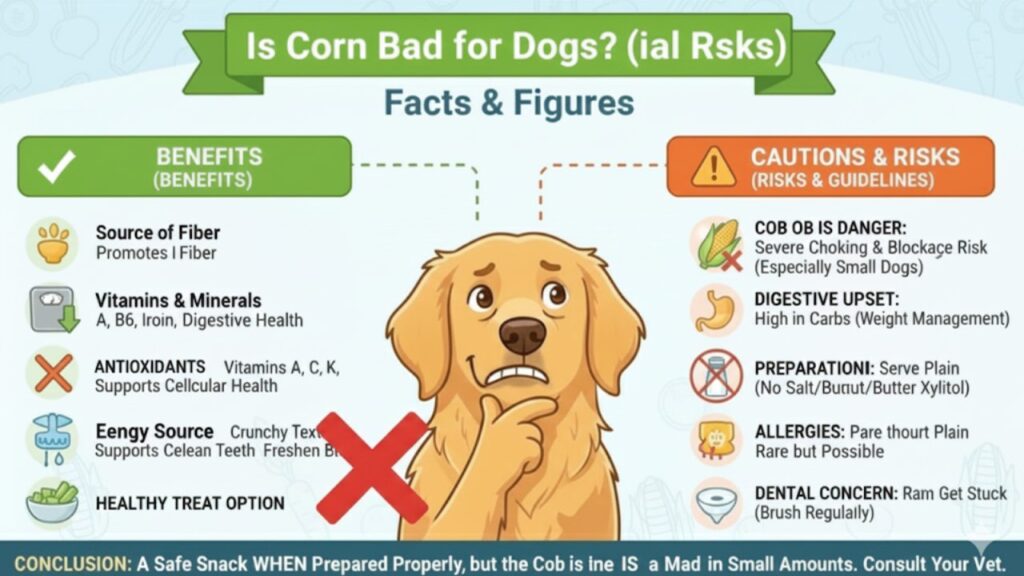
Corn is not toxic to dogs, but problems can occur if it is fed incorrectly or in excess. Because corn contains carbohydrates and natural sugars, eating too much may contribute to weight gain, especially in less active dogs.
Some dogs may experience stomach upset, including gas, bloating, diarrhea, or vomiting when introduced to corn too quickly. Dogs with diabetes or blood sugar sensitivity should eat corn only under veterinary guidance due to its moderate glycemic index.
Corn Allergies in Dogs
Corn allergies in dogs are rare, affecting less than one percent of the canine population according to veterinary studies. Most food allergies in dogs are linked to animal proteins, not grains.
Possible allergy symptoms include:
- Itchy skin or paws
- Ear infections
- Digestive issues
- Lethargy
If symptoms appear after eating corn, stop feeding it and consult a veterinarian. A food elimination diet may be needed to confirm the allergy.
Parts of Corn Dogs Can and Can’t Eat
Safe parts:
- Cooked corn kernels
- Plain, air-popped popcorn (no salt or butter)
Unsafe parts:
- Corn cob
- Corn husk and silk
- Raw corn
Dogs cannot digest the cob, husk, or silk. These parts can cause choking or dangerous intestinal blockages.
Unsafe Corn Products for Dogs
Some corn-based foods are unsafe due to added ingredients. Dogs should never eat:
- Corn on the cob
- Canned corn (high sodium)
- Creamed corn (dairy and sugar)
- Corn chips (salt and oil)
- Corn syrup (high fructose)
- Buttered or seasoned corn
These products can cause digestive problems, weight gain, or long-term health issues
Choking Hazards and Intestinal Blockages
Corn cobs are one of the most dangerous corn-related items for dogs. Dogs cannot chew or digest them properly. If swallowed, the cob can become stuck in the throat or intestines, causing a life-threatening blockage.
Common warning signs include:
- Vomiting
- Diarrhea or constipation
- Lethargy
- Loss of appetite
- Abdominal pain
Veterinarians recommend immediate medical attention if a dog eats a corn cob, even if symptoms are not yet visible.
Is Corn in Commercial Dog Food Okay?
Yes, corn in commercial dog food is generally safe and nutritionally acceptable. Pet food manufacturers include corn because it provides digestible carbohydrates, protein, fiber, and essential fatty acids.
When reading dog food labels, ingredients are listed by weight. If corn appears before protein, it means the food contains more corn than meat, which may not be ideal. Balanced formulas usually list animal protein first, with corn used as a supporting ingredient.
How to Safely Prepare Corn for Dogs
Corn should always be cooked before feeding it to dogs, as cooked corn is easier to digest.
Safe preparation steps include:
- Boiling or steaming corn without salt or seasoning
- Letting it cool completely
- Cutting kernels off the cob
- Discarding the cob securely
Avoid grilling, frying, or adding butter, oil, sugar, or spices.
Healthy Ways to Serve Corn to Dogs
Corn can be served in simple, safe ways:
- Mixed into regular dog food as a topper
- Given as a small snack
- Used in vet-approved homemade dog treats
All servings should remain small and occasional to prevent weight gain or digestive upset.
What to Do If Your Dog Eats Too Much Corn
If a dog eats too much corn, mild digestive issues may occur. Monitor your dog for:
- Vomiting
- Diarrhea
- Gas or bloating
- Fatigue
Most cases resolve within 24 hours. If symptoms worsen or persist, contact a veterinarian. If a corn cob was eaten, seek veterinary care immediately.
FAQs About Corn for Dogs
Can puppies eat corn?
Yes, puppies can eat small amounts of cooked corn kernels occasionally, but their stomachs are sensitive, so introduce slowly.
Can dogs eat corn on the cob?
No. Corn cobs are dangerous and can cause choking or intestinal blockage.
Can dogs eat popcorn?
Yes, plain air-popped popcorn is safe in small amounts. Avoid butter, salt, and unpopped kernels.
Can dogs eat sweet corn or canned corn?
Fresh or frozen sweet corn is safe when cooked. Avoid canned corn due to added salt.
Final Verdict: Can Dogs Eat Corn?
Yes, dogs can eat corn safely when it is cooked, plain, and served in moderation. Corn offers energy, fiber, and essential nutrients, but it should never replace a balanced dog diet.
Avoid corn cobs, husks, seasoning, and processed corn products. When in doubt, consult your veterinarian before adding new foods to your dog’s diet.
Other Fruits And Vegetables Dogs Can Eat
https://googleads.g.doubleclick.net/pagead/ads?gdpr=0&client=ca-pub-1196699116868038&output=html&h=280&slotname=7505433033&adk=2240494&adf=3010891995&pi=t.ma~as.7505433033&w=842&fwrn=4&fwrnh=100&lmt=1768254577&rafmt=1&format=842×280&url=https%3A%2F%2Fnamesgenius.com%2Fcan-dogs-eat-mango%2F&fwr=0&fwrattr=true&rpe=1&resp_fmts=3&uach=WyJXaW5kb3dzIiwiMTAuMC4wIiwieDg2IiwiIiwiMTQzLjAuNzQ5OS4xOTMiLG51bGwsMCxudWxsLCI2NCIsW1siR29vZ2xlIENocm9tZSIsIjE0My4wLjc0OTkuMTkzIl0sWyJDaHJvbWl1bSIsIjE0My4wLjc0OTkuMTkzIl0sWyJOb3QgQShCcmFuZCIsIjI0LjAuMC4wIl1dLDBd&abgtt=6&dt=1768254575584&bpp=4&bdt=3421&idt=349&shv=r20260109&mjsv=m202601060101&ptt=9&saldr=aa&abxe=1&cookie=ID%3D8884e5dd6261ab67%3AT%3D1768251686%3ART%3D1768254515%3AS%3DALNI_MYqW8rMBIBemWV7_xKHJCDUzzeH4A&gpic=UID%3D000012e4706808fe%3AT%3D1768251686%3ART%3D1768254515%3AS%3DALNI_MaONjbgQn_Squ0g_VyN9bV38idxoA&eo_id_str=ID%3Dffa3ef1bbed844d8%3AT%3D1768251686%3ART%3D1768254515%3AS%3DAA-AfjYFZJSsNwQKmFhd1n3jfJL_&prev_fmts=0x0%2C842x280%2C842x280%2C842x280&nras=1&correlator=3700956035779&frm=20&pv=1&u_tz=300&u_his=1&u_h=768&u_w=1366&u_ah=728&u_aw=1366&u_cd=24&u_sd=1&dmc=8&adx=55&ady=9640&biw=1351&bih=641&scr_x=0&scr_y=8229&eid=31095745%2C31096100%2C95379212%2C95379214%2C95372615&oid=2&pvsid=6574200431469046&tmod=2021625122&uas=0&nvt=1&ref=https%3A%2F%2Fnamesgenius.com%2Fcategory%2Fpet-health%2F&fc=1920&brdim=0%2C0%2C0%2C0%2C1366%2C0%2C1366%2C728%2C1366%2C641&vis=1&rsz=%7C%7CEebr%7C&abl=CS&pfx=0&fu=128&bc=31&bz=1&pgls=CAEaAzYuOQ..~CAEQBBoHMS4xNjMuMA..&ifi=7&uci=a!7&btvi=2&fsb=1&dtd=1475
Dog can enjoy many of the same fruits and vegetables you eat, such as: