
Can Dogs Eat Watermelon?
Watermelon is a sweet and refreshing fruit that many people love, especially in warm weather. Because of this, many pet owners wonder if their dogs can enjoy it too. The simple answer is Yes, dogs can eat watermelon, but only the soft, red flesh, and only in small, safe portions.
Watermelon can be a fun treat that helps with hydration, provides vitamins, and supports digestion. In this article, we will explain why watermelon can be good for your dog, how to feed it safely, how much is okay, and what risks to avoid.
Can Watermelon Be Good for Dogs?
Watermelon contains a mix of vitamins, minerals, water, and antioxidants that can support your dog’s health when given in moderation. The fruit is rich in Vitamin A, Vitamin C, potassium, and plenty of water. These nutrients help with hydration, digestion, immune support, and energy.
- Vitamin A supports good vision, skin health, and immunity.
- Vitamin C helps fight free radicals and supports the immune system.
- Potassium helps muscles and nerves work properly.
The American Kennel Club (AKC) notes that watermelon is safe for dogs when the seeds and rind are removed, and the fruit is given in small amounts because it is hydrating and low in calories.
Freshness, Hydration, and Nutrient Boost
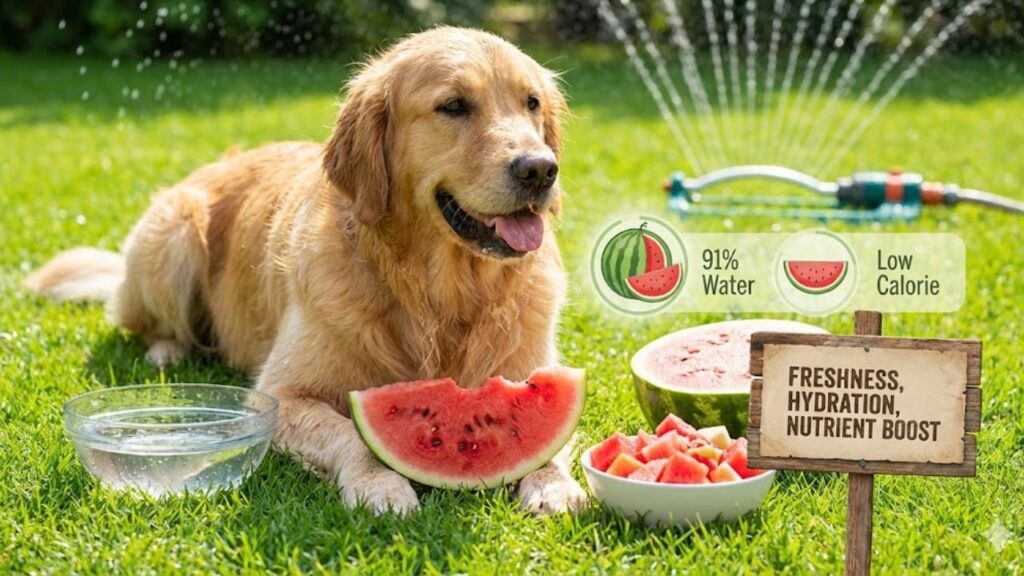
One of the biggest benefits of watermelon is hydration. Since watermelon is mostly water, it helps keep your dog cool and refreshed. The fruit also contains fiber, which supports digestion and may help prevent mild stomach issues.
Watermelon is naturally sweet, but because it is low in calories, it can be a better snack option than many processed treats. A few small pieces can brighten your dog’s day, especially on a warm afternoon.
Nutritional Data (Per 100g of Fresh Watermelon)
| Nutrient | Amount (Per 100g) |
|---|---|
| Calories | 30 kcal |
| Carbohydrates | 7.5 g |
| Fiber | 0.4 g |
| Protein | 0.6 g |
| Fat | 0.2 g |
| Vitamin A | 11% of daily value |
| Vitamin C | 14% of daily value |
| Potassium | 112 mg |
| Water | 91% |
As you can see, watermelon is low in calories and full of water, which makes it a great occasional treat for dogs.
How to Feed Watermelon to Dogs
There are a few safe and easy ways to give watermelon to your dog:
Fresh Watermelon (Cubed)
Cut small, bite-sized cubes of fresh watermelon and remove all seeds. Make sure the fruit is ripe and soft.
Watermelon Purée
Blend the red flesh until smooth. You can drizzle a small amount over your dog’s regular food.
Frozen Watermelon Treats
Freeze watermelon cubes to make a simple, cooling summer snack.
Watermelon Mix-In
Add a tablespoon of finely chopped watermelon to your dog’s meals for added hydration.
Caution
- Do not give your dog watermelon rind, as it can cause stomach issues or blockage.
- Do not give seeds, as they may cause intestinal problems, especially in small dogs.
- Do not give watermelon-flavored products, as they may contain sugar or artificial ingredients.
How Much Watermelon Can Dogs Eat?

| Dog Size | Maximum Amount (Per Day) |
|---|---|
| Small Dogs | 1–2 small cubes |
| Medium Dogs | 3–4 small cubes |
| Large Dogs | 5–6 small cubes |
Always keep servings small, since too much fruit can upset your dog’s stomach.
Watermelon Health: Benefits for Dogs
- Hydrates the Body – High water content keeps your dog refreshed.
- Helps Digestion – Gentle fiber supports regular bowel movements.
- Boosts Immunity – Vitamins A and C help strengthen immune health.
- Supports Muscles and Nerves – Potassium helps your dog stay active.
- Low in Calories – Great for dogs that need lighter treats.
- Loaded With Antioxidants – Helps reduce inflammation and cell damage.
Watermelon vs. Other Dog-Friendly Fruits
Other healthy fruits can support your dog’s diet in similar ways:
Carrots
Yes! Dogs can eat carrots. They help clean teeth and provide beta-carotene and fiber.
Apple Slices (no seeds)
Yes! Apples offer vitamin C and fiber and make a crunchy, sweet snack.
Blueberries
Packed with antioxidants, blueberries are one of the healthiest fruits for dogs.
A small combination of watermelon, carrots, and apple slices can make an excellent low-calorie treat mix for your pet.

Final Thoughts
So, can dogs eat watermelon? Yes, but only in moderation. Watermelon can help hydrate your dog, support digestion, and add useful vitamins when served safely. Just remember to use only the red flesh, remove the seeds, cut off the rind, and keep portions small.
Avoid serving watermelon to dogs with diabetes or sensitive stomachs. When offered correctly, watermelon can be a healthy and refreshing treat that your dog will happily enjoy.